
In today’s fast-changing construction environment, clients require more clarity, accuracy, and certainty before embarking on any construction project. While drawings and 2D plans are helpful in their own right, they may not provide the desired understanding of how the final structure will look in real life. This is where 3D visualization has revolutionized modern architectural construction.
With 3D visualization, architects, contractors, and clients can visualize the construction project even before the foundation is laid. This way, decision-making is simplified, expedited, and perfected.
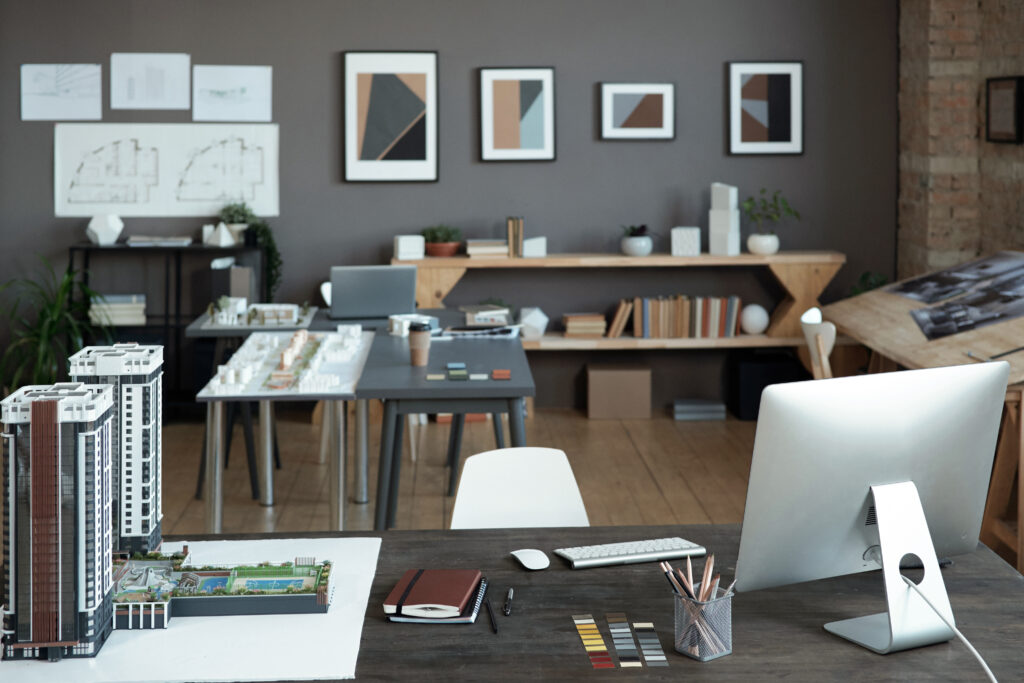
What is 3D Visualization in Architecture?
3D visualization is a method of creating a realistic image of a construction project using specialized design software. The image is complete with details such as textures, colors, lighting, materials, and environments.
Unlike drawings, 3D visualization provides a complete image of the construction project from multiple angles. In this regard, clients can gain a complete understanding of how the final structure will look.
Improves Accuracy of Design
3D visualization helps architects to identify any problems that may be associated with the design. This can be done effectively compared to a 2D drawing.
Therefore, any alterations that are necessary can be made before the construction of the house. This helps to reduce any errors that may be associated with the design. Also, it helps to ensure that the design is not only practical but also aesthetically pleasing.
Saves Time and Money
Making alterations during the construction of a house can be costly. This can be avoided by using 3D visualization.
For example, if a client wants to make alterations to the outside of the house, this can be done easily. Therefore, it helps to save time as well as money.
Enhances Client Communication
Not everyone can read architectural designs. This can be avoided by using 3D visualization.
3D visualization helps to bridge this gap. This helps the client to understand the designs better. Therefore, it enhances client communication.
Supports Better Decision Making
Using 3D visualization, the client is able to visualize different designs before making any final decisions. The client is able to try different designs, colors, materials, and even lighting.
This ensures better decision making, and the final design is perfect in all ways.
Improves Presentation and Approval Process
Using 3D visualization, the client is able to create powerful presentations. The client is able to show the design to others in a realistic manner.
This ensures faster approval processes, and the client is able to get the designs approved in a very efficient manner.
Adds Realistic Detail to Designs
Using 3D visualization, the client is able to add realistic details to the design. The design is able to include details such as shadows, reflections, landscaping, and even the environment.
This ensures the client is able to visualize the design even before the building is constructed, and this creates a sense of excitement.
Conclusion
Using 3D visualization in building designs has become quite common in modern times. The design is not only clearer, but it is also easier to communicate, and it has reduced costs and improved decision making.
This is because, by allowing the client to visualize his project in a realistic sense, it ensures that the final product meets his expectations. In a world where precision and efficiency are more important than ever, 3D visualization is no longer a choice, but a necessity in the successful construction of any project.